IRS step-up & date-of-death appraisals in Delco, PA
A step-up in basis rests on a value from the past, not today.
A retrospective appraisal reports what a property was worth on an earlier effective date—usually the date of death—with its condition and comparable sales in view. Start with the address, the reason you need the value and the date your adviser has identified.
The question behind the appraisal
What is a step-up appraisal, and why is it dated to the past?
The IRS generally ties inherited-property basis to fair market value at death, with exceptions including a qualifying alternate-valuation election. A basis adjustment can be upward or downward; the label “step-up appraisal” does not promise a tax saving. Read the IRS explanation of inherited-property basis. Your tax adviser should identify the applicable date and use before you order a report.
A step-up appraisal—also called a date-of-death or retrospective appraisal—develops an opinion of that value for a specific property and past effective date. Today’s asking prices and today’s condition are not the answer; the assignment researches the market as it existed on the date being valued. Tell us who will use the report, and confirm the effective date and purpose with your tax adviser before the assignment begins.
Three questions a current price cannot answer
Which date?
The date you order a report, the inspection date and the date being valued are usually different. A retrospective assignment researches the market relevant to that earlier effective date.
Which condition?
A home may have been renovated since the date of death. Dated photos, prior listings, inspection records and repair invoices help document the condition as it was then.
Which comparisons?
The analysis must address the market relevant to the effective date. Later records may establish earlier facts; the appraiser determines what evidence is appropriate and explains its use.
A market month cannot replace your effective date.
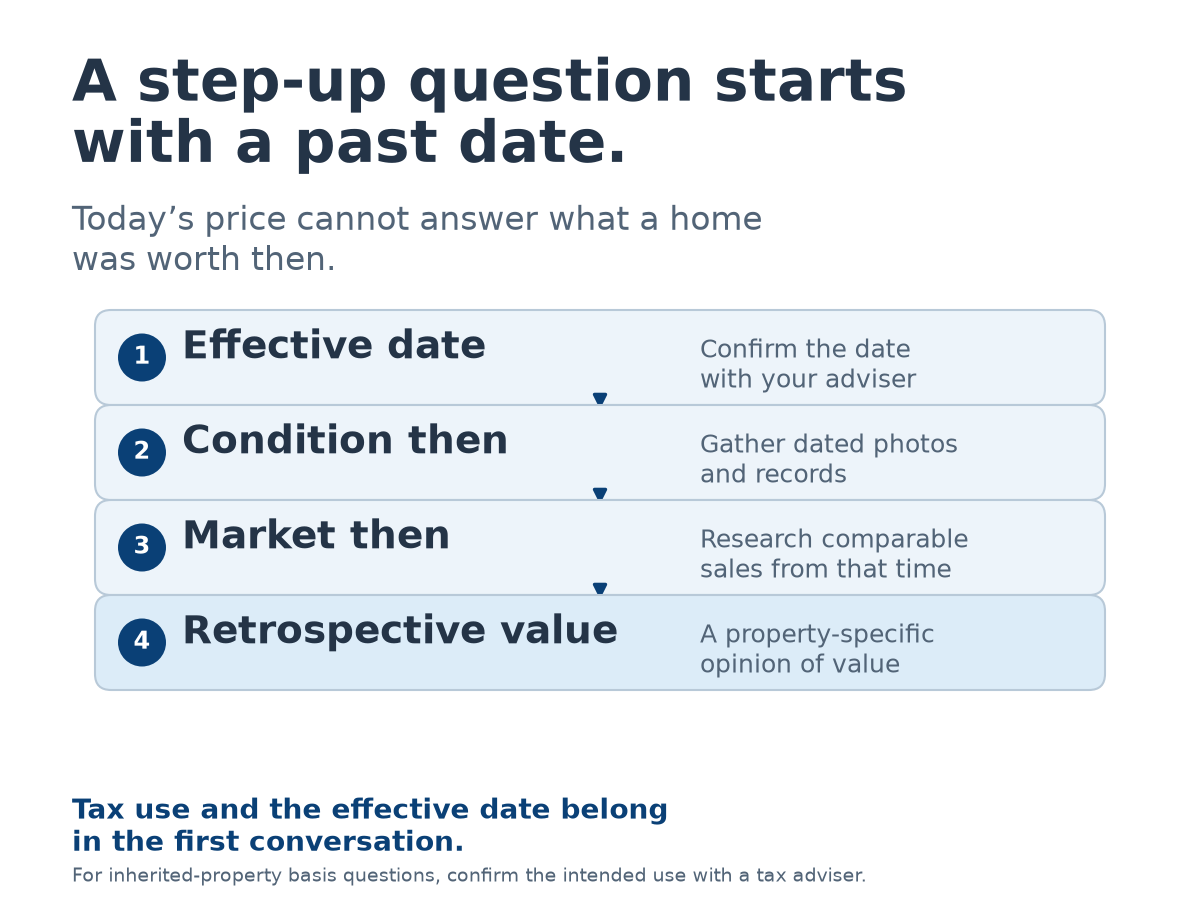
A market month describes a group of sales. It does not value an inherited home on a different date or isolate its condition and features. A retrospective assignment researches the period and property actually being valued.
A past date needs a view of the property as it was then
If a home was inherited before a renovation, a current inspection alone cannot document its earlier condition. Share dated photographs, old listing details, inspection records and repair invoices if you have them. Explain what changed and when; the appraiser determines how the available evidence supports the assignment.
A retrospective appraisal reports a value as of a past effective date. Later records may help establish facts about that earlier period; they do not make today’s condition or today’s prices the answer. Missing records and assumptions need to be addressed in the scope and report.
Confirm the purpose and date with your adviser
The IRS basis guidance applies whether or not an estate tax return is filed. An alternate-valuation election has conditions; it is not a choice of whichever date gives the preferred result. Ask your tax adviser which date and documents apply to the estate.
Federal estate tax filing requirements depend on the estate’s circumstances, and an estate may file for reasons such as a portability election. Your attorney or tax adviser should confirm the requirements; an appraisal does not guarantee a particular tax result or acceptance by a court or the IRS.
What to gather before requesting a quote
You do not need a complete archive to start. These details help identify the research, access and timing the assignment may require.
| Bring or describe | Why it helps |
|---|---|
| Property address and type | Identifies the home, its location and the kind of property to research. |
| Purpose, intended users and effective date | Distinguishes a past date-of-death value from a value for a current decision. |
| Repairs, renovations and dated records | Helps separate the property’s condition on the effective date from later changes. |
| Access arrangements and deadline | Allows inspection needs, research time and delivery availability to be discussed. |
| Instructions from your attorney or accountant | Helps identify reporting needs before the scope and fee are agreed. |
From the first call to the report
- Discuss the assignment. Share the property, purpose, intended users, effective date and deadline. Confirm the scope, fee and delivery estimate before proceeding.
- Document the property. Arrange access as needed and provide available records about its condition, features and changes since the effective date.
- Research and reconcile. The appraiser evaluates evidence relevant to the effective date and explains how it supports the opinion of value.
- Review the report’s scope. Read the effective date, intended use, assumptions and limitations. Raise factual questions about the property or records with the appraiser.
Retrospective appraisal fees and timing
Ask for a written scope, fee and delivery estimate for your property, intended use and deadline.
The same date-of-death value often supports more than one need. If the matter involves probate administration, our probate appraisal page describes that related service, and the estate appraisal page covers valuing an inherited home for settlement. You can also explore the broader Delco appraisal services to frame your request. Whether one report can serve several purposes is a question to raise with your adviser and the appraiser.
Prepared for Eagle Home Appraisal Delco with AI writing assistance. This page explains how a retrospective appraisal works; it does not value an individual property.